Here's a little more about
what being a kidney donor entails.
what being a kidney donor entails.
● To donate a kidney, you must be in good health and have normal kidney function.
● Living donation takes place when a living person donates an organ for transplantation to another person.
A living donor can be a family member, good friend, spouse, in-law, or even a stranger.
● Donors are never financially compensated. Please note that under federal law, it is illegal to receive money or gifts in exchange for an organ donation.
Insurance should cover the screening process and patients/families are able to provide donors with compensation for time out of work and travel expenses.
● To be a donor you must go through an evaluation process.
This is done through the "Kidney Transplant Coordinator" and is completely confidential. Read more here or see section on process below.
● Donation requires laparoscopic surgery. Surgery is only 2-3 hours and donors are typically able to leave the hospital after 2-3 days of observation.
More complete recovery takes between 2-3 weeks. Read more about life after donation here.
● Living donation offers extended years of kidney function and better outcomes than deceased donation. Candidates are careful matched, the process is carefully planned, and surgery is more successful due to direct transfer.
● Our dad's blood type is A. So he can receive a donation from anyone with an O or A blood type. Yale New Haven Hospital also participates in a donor match program which allows more patients to be matched with donors.
When you donate an organ to someone else, you are providing a life-sustaining gift. But, there is a lot to be considered before making your decision. It is important to educate yourself and make sure you understand the risks and benefits of donation (more here). If you do not think being a living donor is for you, you can still help us spread the word by sharing this page. Thanks for your support!
● Living donation takes place when a living person donates an organ for transplantation to another person.
A living donor can be a family member, good friend, spouse, in-law, or even a stranger.
● Donors are never financially compensated. Please note that under federal law, it is illegal to receive money or gifts in exchange for an organ donation.
Insurance should cover the screening process and patients/families are able to provide donors with compensation for time out of work and travel expenses.
● To be a donor you must go through an evaluation process.
This is done through the "Kidney Transplant Coordinator" and is completely confidential. Read more here or see section on process below.
● Donation requires laparoscopic surgery. Surgery is only 2-3 hours and donors are typically able to leave the hospital after 2-3 days of observation.
More complete recovery takes between 2-3 weeks. Read more about life after donation here.
● Living donation offers extended years of kidney function and better outcomes than deceased donation. Candidates are careful matched, the process is carefully planned, and surgery is more successful due to direct transfer.
● Our dad's blood type is A. So he can receive a donation from anyone with an O or A blood type. Yale New Haven Hospital also participates in a donor match program which allows more patients to be matched with donors.
When you donate an organ to someone else, you are providing a life-sustaining gift. But, there is a lot to be considered before making your decision. It is important to educate yourself and make sure you understand the risks and benefits of donation (more here). If you do not think being a living donor is for you, you can still help us spread the word by sharing this page. Thanks for your support!
THE BIG ASK
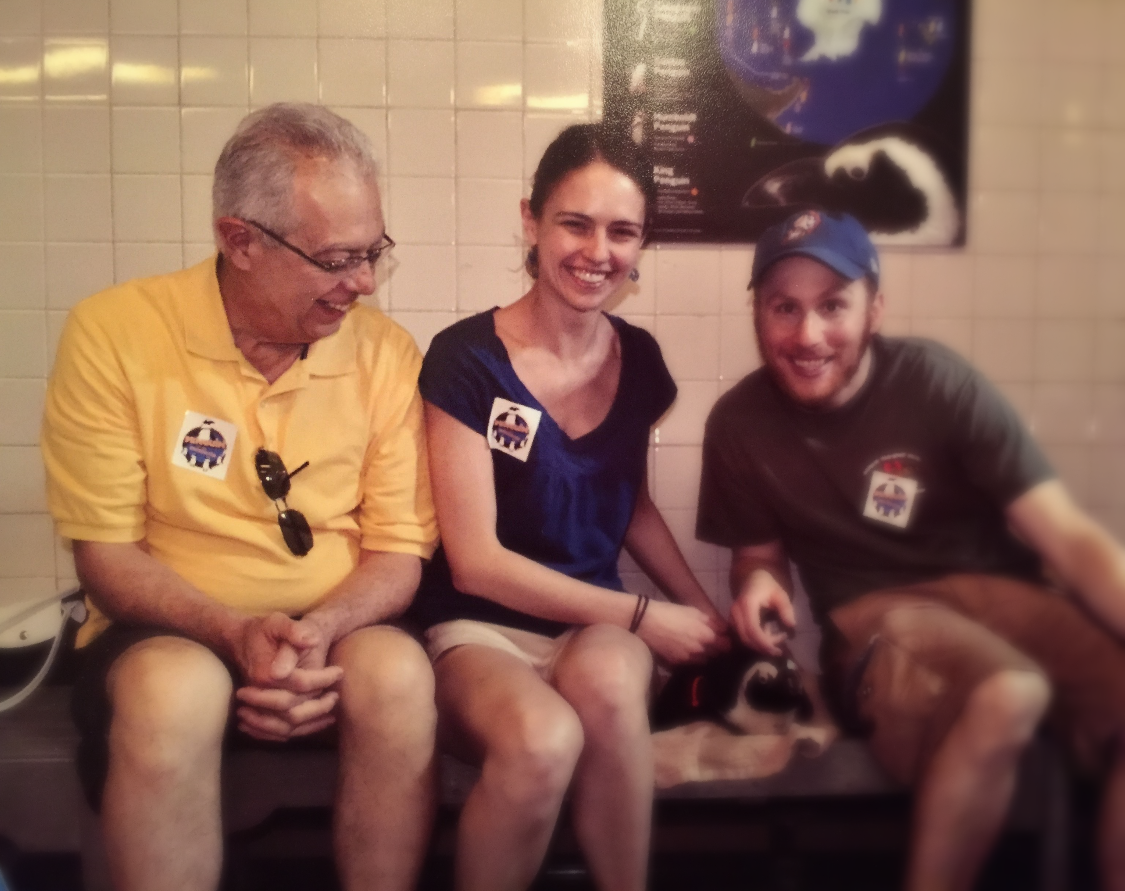
When our Dad went in for a more comprehensive evaluation we didn't quite know what to expect. We knew that a transplant may be something he would need eventually; however, we found out that his kidneys are failing quicker than we thought.
The doctors at Yale New Haven Hospital have officially identified him as a candidate for a kidney transplant.
He is now on the wait list, but it is long enough that many people never have the chance to get off of it... So the doctors hope that we can find a living donor and that we can do so soon.
PROCESS | How to Proceed as a Potential Living Donor:
Our dad is registered at Yale New Haven Hospital in Connecticut. The screening process is done over the phone, and even tests can be done locally.... travel. Phase 1: process phone screening. Phase 2: initial testing. Phase 3: sad g Phase 4: see yales website? Over the years, we’ve created a detailed system for solving any issues that come up in our software. This system can be broken down into four phases. Identification and Escalation, Phase 2: Fixing the Problem, Check out our latest video, Lifecycle of a Bug, to get the deep dive of how we manage bugs.
Our dad is registered at Yale New Haven Hospital in Connecticut. The screening process is done over the phone, and even tests can be done locally.... travel. Phase 1: process phone screening. Phase 2: initial testing. Phase 3: sad g Phase 4: see yales website? Over the years, we’ve created a detailed system for solving any issues that come up in our software. This system can be broken down into four phases. Identification and Escalation, Phase 2: Fixing the Problem, Check out our latest video, Lifecycle of a Bug, to get the deep dive of how we manage bugs.
Want to know how you can help our dad?
TAKE ACTION | Here's how you can take the first step in becoming a donor for Ray:
1. Call us at 1-203-915-6960, or fill out the form below.
We can give you more information, try to answer your questions, and give you some idea of what the process might be like if you decide to move forward.
2. Alternatively, call the Donor Referral Hotline at Yale New Haven Hospital (1-866-925-3897) directly in order to begin the evaluation process. Please be sure to give your name and cite Raymond D’Amato as the patient to which you wish to donate.
(Please be patient with this process as it involves you calling and being asked a series of questions over multiple calls. We recognize that you are taking a great and generous step and since this is the process the hospital has we cannot help or make it any easier. Thanks for bearing with it.)
Again, we are so grateful for your help and support! Thank you.
1. Call us at 1-203-915-6960, or fill out the form below.
We can give you more information, try to answer your questions, and give you some idea of what the process might be like if you decide to move forward.
2. Alternatively, call the Donor Referral Hotline at Yale New Haven Hospital (1-866-925-3897) directly in order to begin the evaluation process. Please be sure to give your name and cite Raymond D’Amato as the patient to which you wish to donate.
(Please be patient with this process as it involves you calling and being asked a series of questions over multiple calls. We recognize that you are taking a great and generous step and since this is the process the hospital has we cannot help or make it any easier. Thanks for bearing with it.)
Again, we are so grateful for your help and support! Thank you.
Want to know more about being a donor for our dad? Please fill out this form.
Thanks! After submitting your contact info above we will follow up with you.
LINKS | MORE RESOURCES:
This Yale New Haven Hospital's webpage. Click on the "Kidney Transplants" + tab.
○ https://www.ynhh.org/services/transplantation/about-transplants.aspx
United Network for Organ Sharing
○ https://www.unos.org/donation/living-donation/
The National Kidney Foundation
○ https://www.kidney.org/transplantation/livingdonors
This Yale New Haven Hospital's webpage. Click on the "Kidney Transplants" + tab.
○ https://www.ynhh.org/services/transplantation/about-transplants.aspx
United Network for Organ Sharing
○ https://www.unos.org/donation/living-donation/
The National Kidney Foundation
○ https://www.kidney.org/transplantation/livingdonors
KIDNEY DISEASE
There is no cure for kidney disease. In our dad's case, like many others, his only option is a transplant.
"Of the 123,000 Americans currently on the waiting list for a lifesaving organ transplant, more than 101,000 need a kidney, but only 17,000 people receive one each year,” (NKF).
Donating a kidney is a generous act that allows someone whose kidney's have failed to live a better, longer life, without needing dialysis.